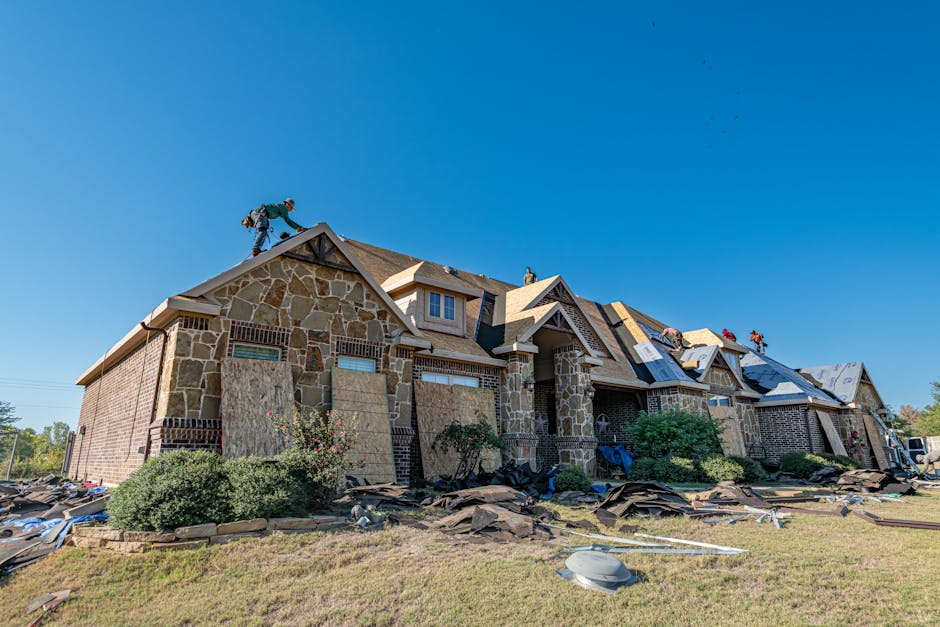
Don't Drown Indoors Finding Emergency Roofing Services Fast
- Mar 9
- 7 min read
When Your Roof Fails, Every Minute Counts

Emergency roofing services are professional, rapid-response repairs that protect your home from further damage after a sudden roofing crisis — available 24 hours a day, 7 days a week.
If you need help right now, here's what to do first:
Get to safety — move away from sagging ceilings or active leaks
Protect your belongings — use buckets and plastic sheeting to limit interior damage
Turn off electricity if water is near any outlets or fixtures
Document everything — take photos and video of all visible damage
Call a 24/7 emergency roofer immediately — every hour of delay matters
Here in Northwest Indiana, severe weather doesn't schedule itself around business hours. Hail, high winds, and heavy rain can shred a roof in minutes — and the damage doesn't stop when the storm does.
Delaying repairs by even 48 hours can increase total damage by up to 20%. Water intrusion that starts as a small drip can trigger mold growth within just 24 to 48 hours, turning a manageable repair into a major restoration project.
The difference between a $500 fix and a $10,000 nightmare often comes down to how fast you act.

Identifying a True Roofing Emergency
Not every missing shingle is a "drop everything and call at 3 AM" situation, but when your home's primary shield is compromised, you need to know the difference between a scheduled repair and a crisis. In our experience serving Lafayette and the surrounding counties, a true roofing emergency is any situation that threatens the structural integrity of your home or the safety of your family.

Structural Failure and Sagging
If you look up and see your roof deck sagging, or if a heavy tree limb has punctured the surface, you are looking at a structural emergency. A sagging roof often indicates that water has been pooling for some time, weakening the supports, or that the weight of snow and ice has pushed the rafters to their limit. This is a collapse risk that requires immediate professional intervention.
Fire Damage
Whether from a lightning strike or an internal house fire, fire damage compromises the decking and the protective layers of your roof. Even if the fire is out, the remaining structure is often charred and porous, leaving your home completely vulnerable to the next rain cloud that floats over Tippecanoe County.
Large-Scale Shingle Loss and High Winds
High winds account for a massive portion of emergency incidents. When wind speeds pick up, they can peel back large sections of shingles like an orange rind. If you can see the underlayment or the wood decking from the ground, your roof is no longer waterproof.
Hail Impact
Indiana is one of the most hailstorm-prone states in the country. According to the Insurance Information Institute, hail damage is a leading cause of property loss in the Midwest. Over the last decade, hail has caused over five billion dollars of insured damage in the state. Hail damage can be sneaky; it often looks like small dents or "bruises" on shingles, but these impacts knock off the protective granules, leading to rapid deterioration and leaks.
Electrical Hazards and Interior Flooding
If water is pouring into your attic and dripping through light fixtures or near electrical outlets, you have a life-safety emergency. Water and electricity are a famously bad combination. In these cases, we advise homeowners to shut off the main power before we even arrive to begin emergency roofing services.
To see examples of how we've handled these crises in the past, browse our Project Gallery.
Immediate Steps to Take During Emergency Roofing Services
When the sky opens up and your ceiling starts dripping, it’s easy to panic. However, the actions you take in the first thirty minutes can save you thousands of dollars in secondary damage.
Safety First: The Evacuation Rule
If you hear cracking sounds or see significant sagging in the ceiling, evacuate that room immediately. A ceiling saturated with water can weigh hundreds of pounds and collapse without warning. Your life is worth more than your drywall.
Interior Protection
Once you are sure the area is safe to enter, focus on "triage" for your belongings.
Move Furniture: Get rugs, electronics, and wooden furniture out of the "drip zone."
The Bucket Brigade: Place a large, watertight container under the leak.
The Ceiling Trick: If you see a "bubble" forming in your ceiling paint, it means water is trapped behind the latex. Poking a small hole in the center of that bubble with a screwdriver (while holding a bucket underneath) can allow the water to drain in a controlled way, preventing the entire ceiling section from heavy saturation and eventual collapse.
Documenting for the Insurance Company
Before we or any other crew starts moving things around, grab your phone. Take clear photos and videos of:
The damage on the roof (from the ground only!).
The water entering the house.
Any damaged furniture or flooring.
This "before" evidence is gold when it comes to insurance coordination. Having a clear record of the disaster helps our insurance specialists fight for the full coverage you deserve. You can learn more about how we integrate these steps into our Services.
Why Professional Emergency Roofing Services Outperform DIY
We get it—you’re handy, you have a ladder, and there’s a tarp in the garage. But we strongly advise against DIY roof repairs during an emergency. Here is why:
The Risk of Falls and Instability
A damaged roof is an unstable roof. If a storm has just passed, the surface is slick, and there may be structural weaknesses you can't see. Falls from roofs are a leading cause of serious injury, and during an emergency, the winds are often still high, making it even more treacherous.
Warranty and Insurance Pitfalls
Believe it or not, a "bad" DIY tarp job can actually void your roof's warranty. If you use the wrong fasteners or cause more damage while trying to fix a leak, your insurance company might deny part of your claim, arguing that your "repairs" caused additional harm.
Specialized Materials vs. Hardware Store Tarps
A professional emergency roofing services team doesn't just throw a blue tarp and some bricks on your roof. We use heavy-duty, UV-resistant tarps and specialized "furring strips" or fasteners that create a watertight seal without destroying the surrounding shingles.
Feature | DIY Tarping | Professional Emergency Tarping |
Safety | High risk of falls/injury | OSHA-compliant safety gear |
Durability | Often blows off in 24 hours | Rated for weeks or months |
Moisture Barrier | Likely to leak at edges | Watertight seal with specialized fasteners |
Insurance | May complicate claims | Includes documentation for adjusters |
Cost | Cheap upfront, risky later | Prevents $5,000-$10,000 in water damage |
Professional tarping is a vital part of secondary damage prevention and mold mitigation. While a DIY fix might stop the "big" leak, a professional fix ensures that moisture isn't seeping into your insulation and rotting your rafters from the inside out. See how we handle these high-stakes repairs in Project 3.
Navigating Costs and Insurance for Emergency Roofing Services
The question everyone asks when they call us at midnight is: "How much is this going to cost?" We believe in transparent pricing, even when things are hectic.
Understanding the Fees
An emergency roof visit typically ranges from $300 to $1,000, depending on how severe the damage is and whether it's 2 PM or 2 AM. If the roof requires extensive tarping to stop a major leak, homeowners can expect to pay between $600 and $2,000 for professional tarping services.
While that might seem like a lot for a "temporary" fix, consider this: professional emergency tarping can prevent $5,000 to $10,000 in water damage costs to your home's interior. It is an investment that pays for itself by stopping the clock on damage escalation.
The Insurance Claim Process
The good news? Most homeowners' insurance policies cover emergency repairs caused by "perils" like wind, hail, or fallen trees. Because high winds and hail account for over 70% of all emergency roof incidents, there is a high probability your insurance will help pick up the tab.
We are insurance specialists. We don't just fix the roof; we help you navigate the paperwork. This includes:
Providing detailed damage reports.
Meeting with the insurance adjuster on-site to ensure they don't miss hidden hail damage.
Helping you maximize your claim so your only out-of-pocket cost is your deductible.
Temporary vs. Permanent Repairs
It’s important to understand that an emergency service is often a two-step process.
The Temporary Fix: Tarping or minor shingle replacement to make the home watertight immediately.
The Permanent Repair: Once the storm has passed and the insurance claim is processed, we return to perform a full restoration that will last for decades.
If the cost of a full replacement is a concern, we offer affordable financing starting as low as $89/mo to ensure your home is protected regardless of your immediate budget. Check out our work on Project 4 to see the transition from emergency fix to permanent beauty.
Frequently Asked Questions about Emergency Roof Repairs
How much do emergency roofing services cost?
As mentioned, the initial visit usually costs between $300 and $1,000. Tarping services range from $600 to $2,000. These prices vary based on the height of the roof, the pitch (steepness), and the materials required. Most of these costs are reimbursable through your insurance company if the damage was caused by a covered event like a storm.
What is included in 24/7 emergency roofing services?
When our crew arrives, we perform a rapid damage assessment to find the source of the leak. We provide debris removal (like clearing away fallen branches), install temporary tarping to stop water intrusion, and perform structural stabilization if the roof is at risk of collapsing. Finally, we provide a detailed plan for permanent repairs.
How quickly can a professional crew respond?
While response times can vary during a massive regional storm, a high-quality emergency roofing services provider typically aims for a 2-4 hour response window. Because we are local to Northwest Indiana and Lafayette, we can often get a crew to your door much faster than national "storm chasers" who have to travel into the area.
Conclusion
A roofing crisis is one of the most stressful things a homeowner can face, but you don't have to face it alone. At Quad-County Roofing, we’ve built our reputation on being there when the clouds are darkest. Whether you’re in Lafayette, Lake County, or anywhere across Northwest Indiana, our in-house crew is ready to respond 24/7.
We aren't just roofers; we are insurance specialists who know how to document your loss to ensure your home is restored to its pre-damage condition—or better. With affordable financing from $89/mo and a commitment to rapid, reliable service, we make sure that "drowning indoors" is never an option.
Don't wait for the mold to start growing. If your roof has failed, Book Online or Contact Us immediately. For more details on our full range of Emergency Roofing Services, visit our dedicated service page. We're ready when you are.